
Athletic Therapy in Burlington
Hands-on care and active rehabilitation to get you back to your sport, your training, or simply moving through your week without an old injury holding you back.
Why choose Propel for Athletic Therapy?
- Certified Athletic Therapist — CAT(C), the protected national designation
- A separate insurance benefit from physio, chiro and massage
- Direct insurance billing · No referral required
- Physiotherapy, chiropractic, massage and a full training space under one roof
Not Sure if seeing an Athletic Therapist is the right move for you?
DIRECT INSURANCE BILLING AVAILABLE
to those that have coverage
How athletic therapy works
Athletic therapy comes out of sport, where the measure of success was always whether the athlete could go back and perform. That standard shapes how the work is done.
A course of athletic therapy is built around progressive loading. Structured, measurable, and reassessed as you go:
- Assess what's limited: strength, range, control, tolerance to load
- Identify the impairments driving the problem
- Load them progressively, adjusting as your capacity changes
- Rehearse the real demands of your sport, training or job before you return to them
- Hand it over. You leave knowing how to keep progressing on your own
Manual therapy, mobilizations, taping, bracing and therapeutic modalities are all part of an athletic therapist's toolkit, and they're used where they help: easing a restricted joint, settling an irritated area, supporting a joint so you can keep training while capacity catches up.
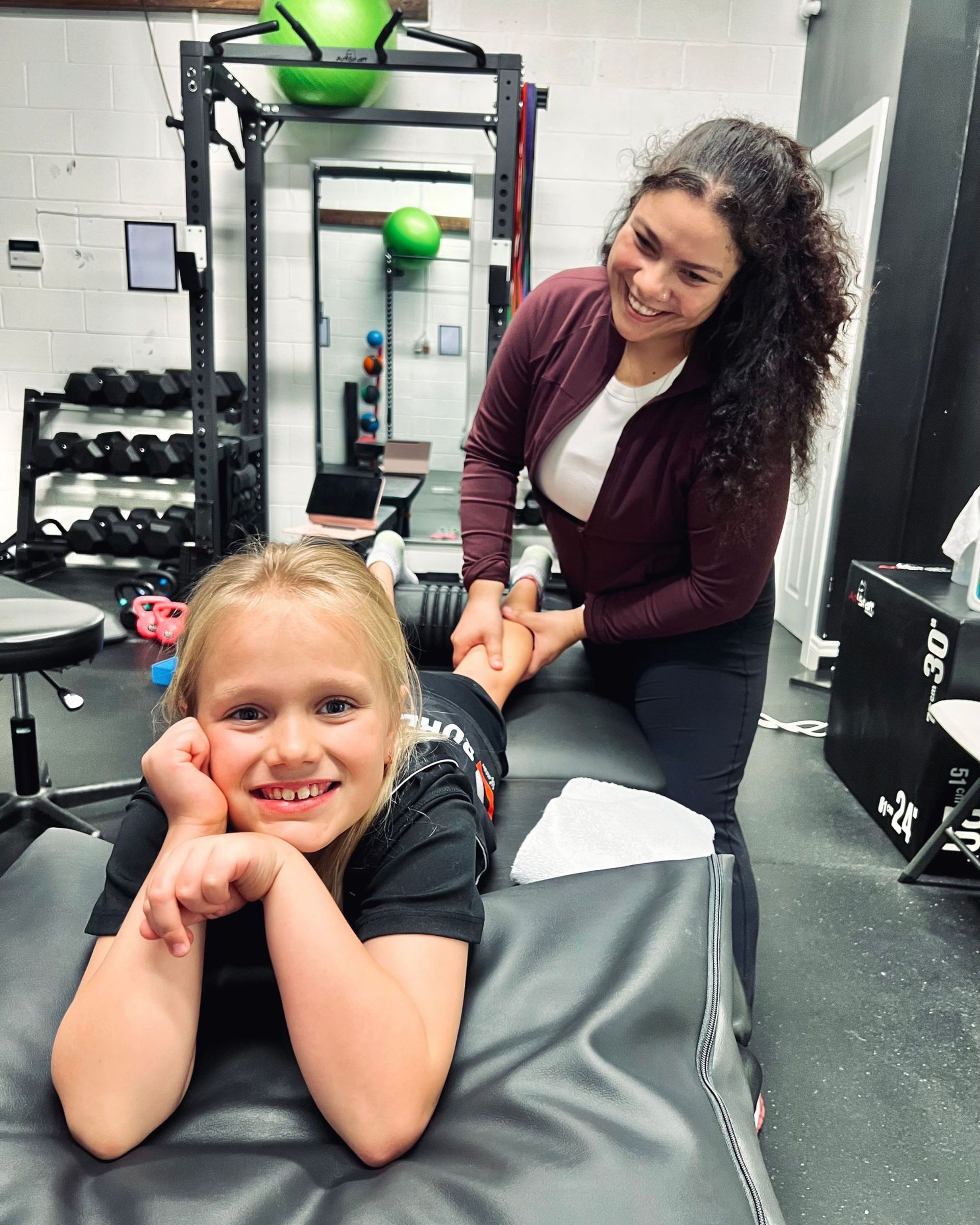
Athletic therapy at Propel is delivered by Dakota De Freitas, CAT(C).
What athletic therapy helps with
Sport and activity injuries
Sprains and strains. Muscle tears and pulls. Tendon problems including Achilles, patellar, rotator cuff, tennis elbow and golfer's elbow. Shin splints and load-related bone pain.
Rebuilding after injury
The stage after the acute phase settles: restoring the strength and mobility lost during time off, and sorting out the load-tolerance problems behind injuries that keep coming back.
Return to sport, done properly
Most re-injuries happen for one of two reasons: someone went back too early, or they went back to full load in a single step.
A return-to-sport progression replaces that guess with criteria. You move up when you meet the standard for the next stage: a strength threshold, a control test, a training load you have already tolerated. Not when a certain number of weeks have passed.
The last stages rehearse the real demands of whatever you are going back to, so your first day back is not the first time your body has met them since the injury.

Athletic therapy isn't just for athletes
Athletic therapy suits anyone who wants to be more active than their body is currently letting them be. We see people getting back on the bike after a fall, returning to the gym after months away, walking further without a hip complaining, managing a physical job, or starting to train for the first time with an old injury in the background.
If you're active, or you want to be, this is for you.
Athletic therapy at Propel
Propel's chiropractors, sports specialist chiropractor and physiotherapists have been getting people back to sport and activity for years. Athletic therapy adds capacity to that work rather than replacing it.
An athletic therapist can take over the active rehabilitation phase of a plan one of our other practitioners has already set, or assess and treat you directly if you'd rather start there. Both routes work, and no referral is needed either way.
Why choose Propel for athletic therapy in Burlington
Certified Athletic Therapist, CAT(C)
CAT(C) is the protected national designation, awarded by the Canadian Athletic Therapists Association. It requires a university degree in athletic therapy, supervised clinical and field hours, and a national certification exam.
Multi-disciplinary under one roof
Physiotherapy, chiropractic, massage therapy and a full training space in the same building, so the plan can change without you starting over somewhere new.
Direct insurance billing
Where your plan covers athletic therapy, we bill your insurer directly through TELUS eClaims and other provider portals, so you're not paying up front.
A separate insurance benefit
Athletic therapy is usually covered as its own benefit, distinct from physiotherapy, chiropractic or massage, so it doesn't draw down coverage you're already using.
Your first athletic therapy appointment: what to expect
We assess, and we start working the same visit. You won't be waiting until appointment two to begin.
WHAT WE ASSESS
- How you currently move, and where it's limited
- Strength, range and control
- How much load the area tolerates
- The demands of the activity you want back
- History, previous treatment and what's already been tried
WHAT YOU'LL LEAVE WITH
- Active rehabilitation already underway, not just a plan for next time
- A clear picture of which impairments are driving the problem
- Exercises to do before your next visit
- A realistic sense of what the road back looks like
Insurance coverage for athletic therapy
Athletic therapy is covered by many extended health plans, usually as a separate benefit from physiotherapy, chiropractic or massage therapy. A different pool of coverage, so it doesn't draw down benefits you're already spending elsewhere.
Not every policy includes it. Coverage depends on your plan, so it's worth a quick check before you book. We'll help, or you can call your insurer directly. Where your plan covers it, we offer direct billing through TELUS eClaims and other provider portals, so you're not paying up front.
What Burlington Clients Are Saying

Book Athletic Therapy in Burlington
Ready to get back to it?
Not sure what you need?
Book the free consult and we'll point you to the right service, even if that turns out to be something other than athletic therapy.
Propel Active Health & Lifestyle is at 1440 Grahams Ln Unit 2, Burlington, ON L7S 1W3, serving Burlington, Oakville, Hamilton, Milton and Waterdown.
Got questions about Propel's approach to Athletic Therapy?
CALL US or drop us a line below
